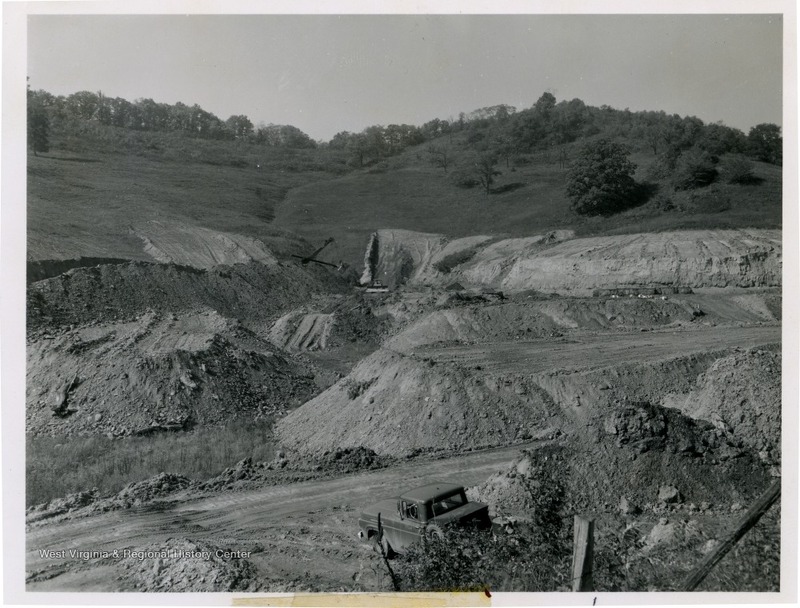
Agricultural land being stripped by the C and P Coal Company in Taylor County. After mining, this land will be leveled and sloped for drainage, then restored to productive farm cover.
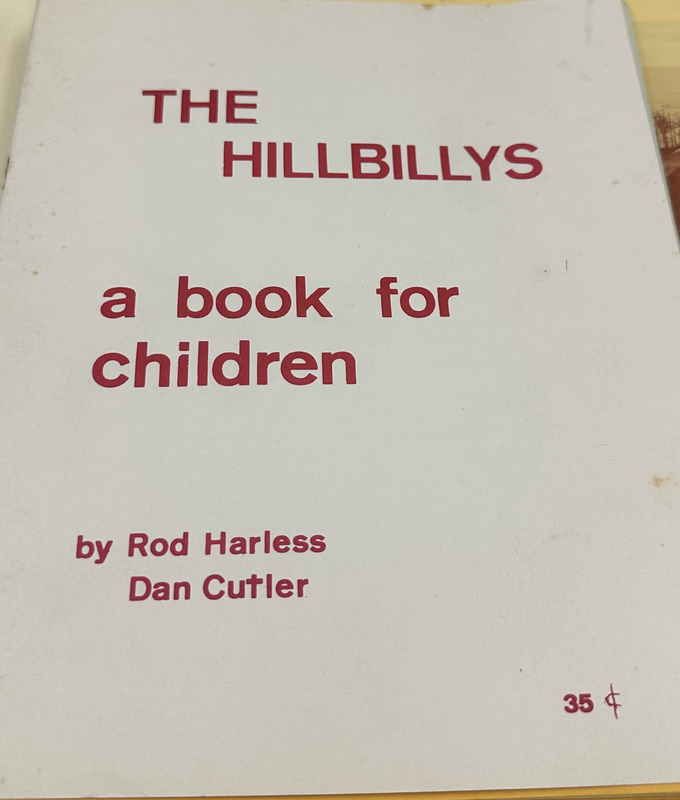
A historical fiction story written by Rod Harless, illustrated by Dan Cutler, and published by the Appalachian Movement Press. While this is a 38-page story, this collection has attached images specific to land, water, and air quality.
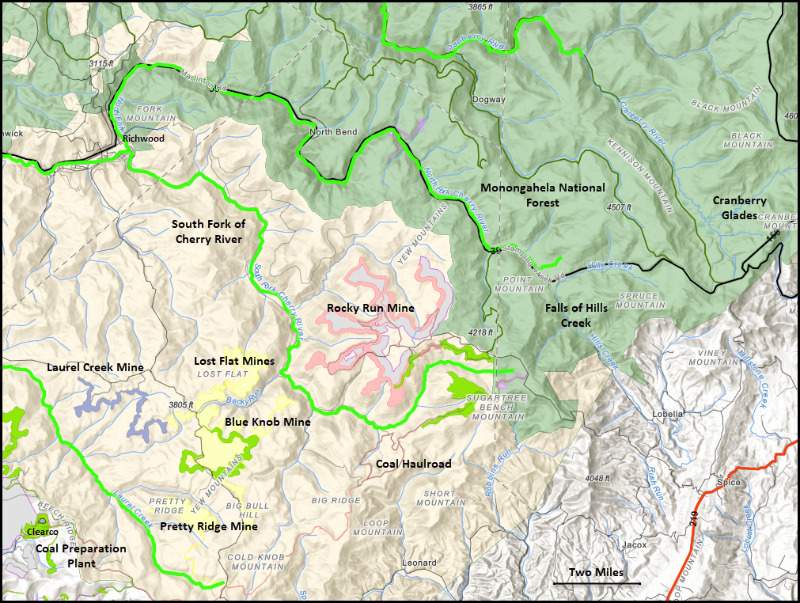
Map of the Mon Forest and South Fork of Cherry River. Surface coal mining is expanding in the mostly forested, high-elevation watershed of the South Fork of the Cherry River. This remote high-mountain area supports the candy darter, native brook trout, and remnant red spruce forest.
This map shows permitted coal operations in the South Fork of Cherry River watershed and adjacent areas within the proclamation boundary of the Monongahela National Forest. Critical habitat for the candy darter is highlighted in bright green.
Photograph of the Candy Darter, a small freshwater fish that was declared an endangered species by the US Fish & Wildlife Services in 2018 (ABRA, 2026)
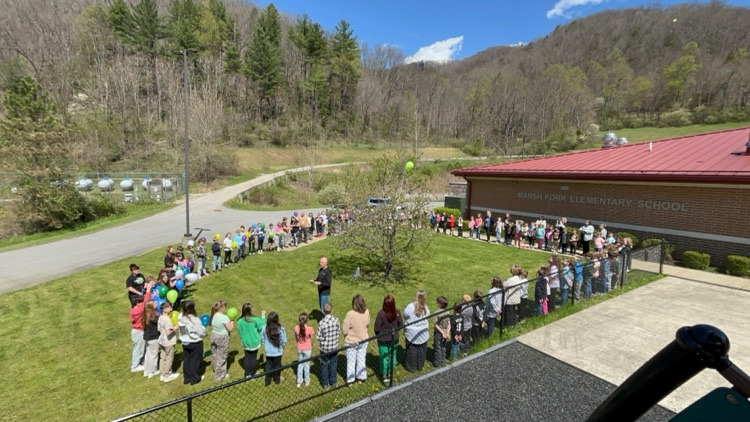
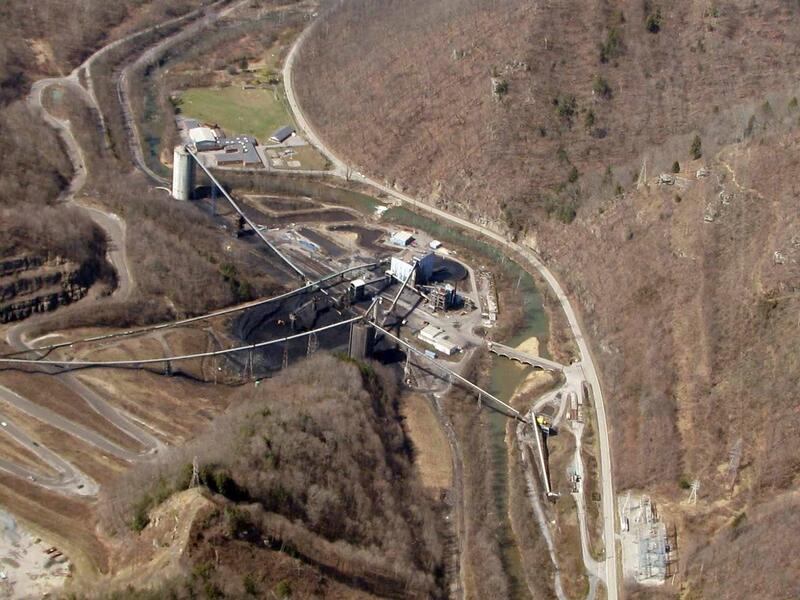
Photograph of Marsh Fork Elementary School in Sundial, West Virginia, taken in 2009. The school sits in the top left corner of the image. From the white silo on, everything in view is the Massey Energy Coal Processing Plant.
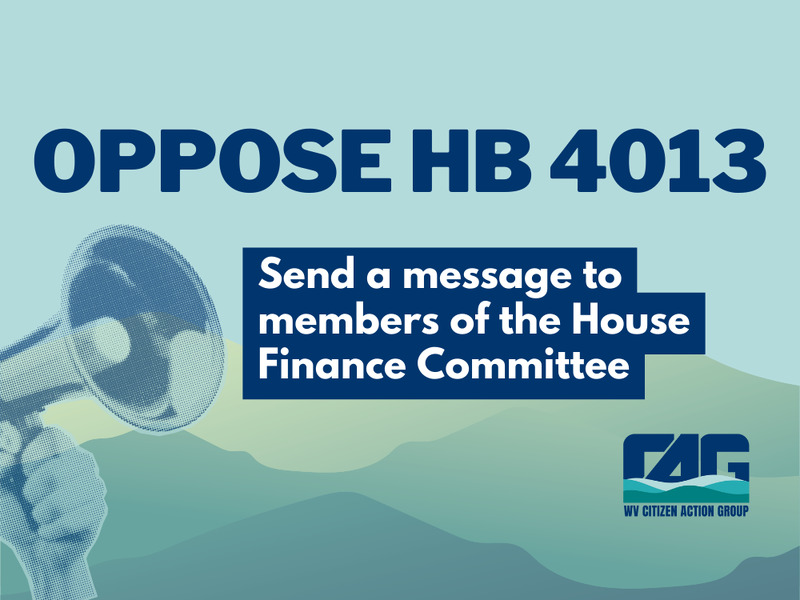
A promotional image for alerting WV CAG members to oppose and resist HB 4013, the bill that would give large tax credits to large-scale developers like data centers. According to WV CAG, "HB 4013 would give significant tax credits to big developers, costing the state hundreds of millions of dollars annually. Now, not only will the counties not see the tax benefits of these massive developments, but the state will not either." On their website, this page also includes a digital form to contact the House Finance Committee.
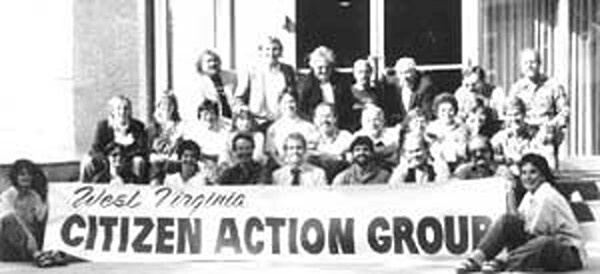
WV CAG has advocated for West Virginia since 1974. The original staff of WV CAG included David Grubb, Perry Bryant, Anne Romance, Scott Walker, Clark Sheldon-Whiteside, Marvin Wanetick, Barbara Dungey, Chuck Hampsher, Jim Worthington, Dave Parry, Kent Moreno, Chris Bathurst, Kathy Hamsher, Jeanne Vencill, Dave Wibberg, Lizz Frost, Will Carter, Sylvia Ward, James Spencer, Mary “Ginger” Kessell, Jeff McCroskey, Kathy Josephson, & Cheryl Sheldon-Whiteside.
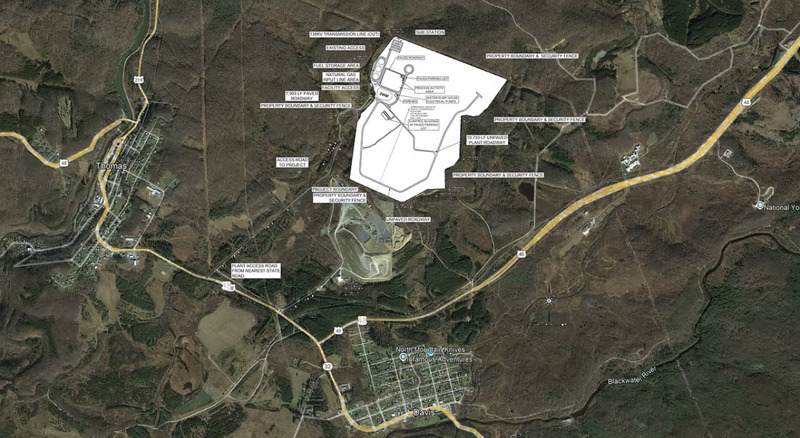
Blueprint for the proposed Tucker microgrid powerplant, which would be constructed less than a mile from both the towns of Thomas and Davis in Tucker County, West Virginia.
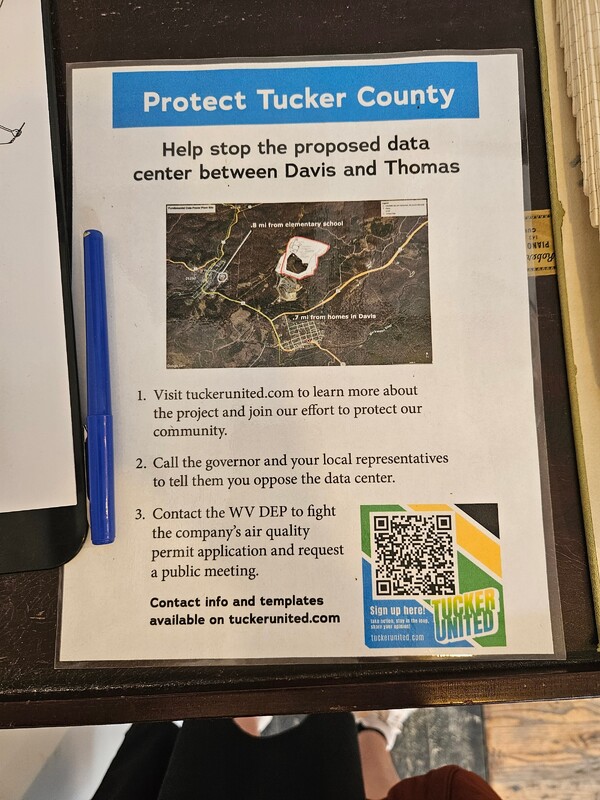
This flyer, spotted in Tucker County, reads "Help stop the proposed data center between Davis and Thomas" and calls on the average citizen to join Tucker United, call the governor and local representatives, and contact the West Virginia Department of Environmental Protection (WVDEP). Tucker United is a grassroots movement that counts on the involvement of as many people as possible to strengthen collective resistance.
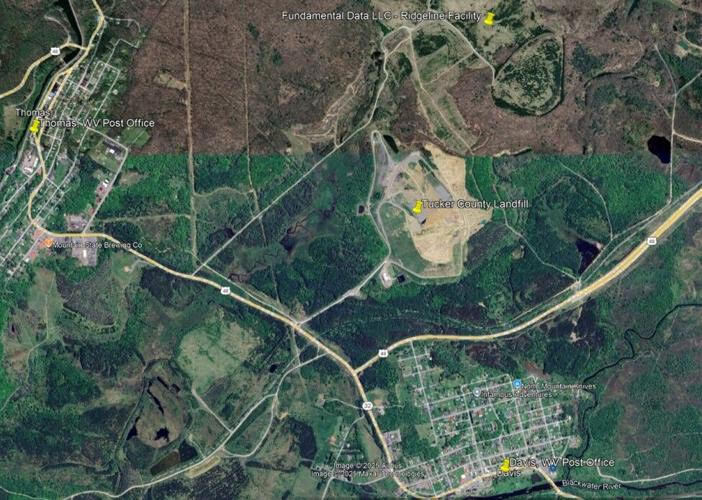
A google map view of the proposed gas-fueled turbine power facility that will power the data center planned to be constructed within Tucker county, West Virginia. Shown is the distanced between it and the Tucker County Landfill and the Thomas and Davis post office.
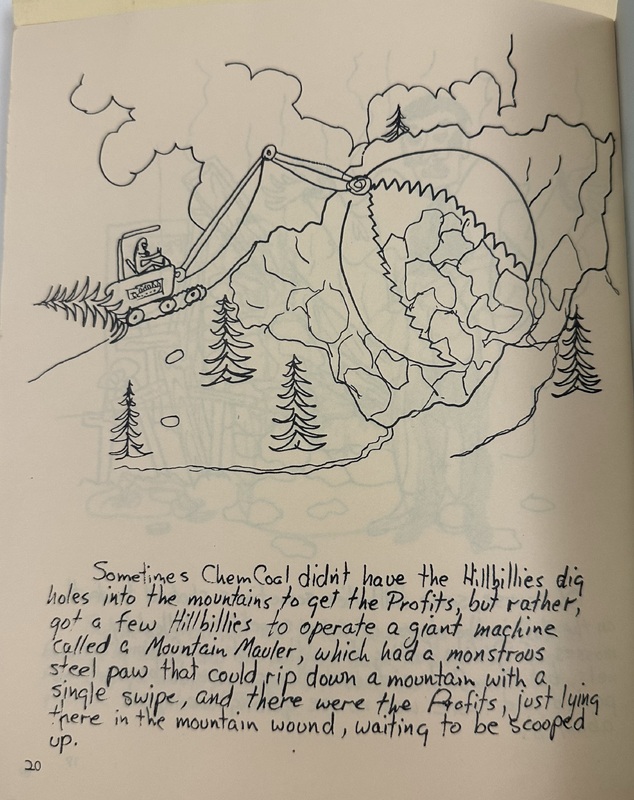
This photo, taken from the children’s book, shows how mining affects the land in West Virginia. The illustration shows a giant machine called a “mountain mauler,” which has a giant claw that was used to rip down mountains for profit.
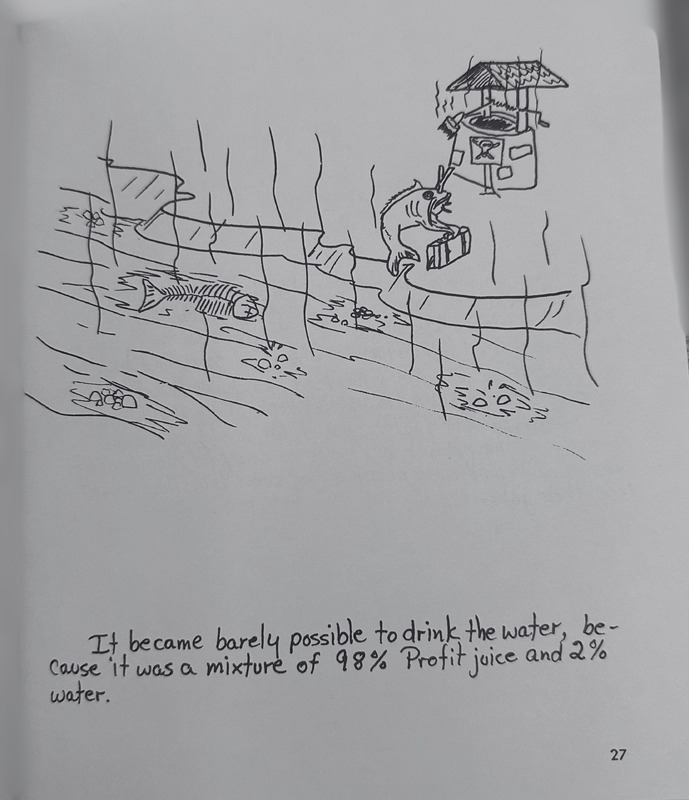
This photo, taken from the children's book, highlights the deteriorating water quality in West Virginia. The illustration highlights how coal toxins and sludge deplete the natural water supply and resources. With death to wildlife, toxins getting tossed into streams, and smelling sludge, this illustration highlights the damaging environmental effects of coal production within West Virginia.
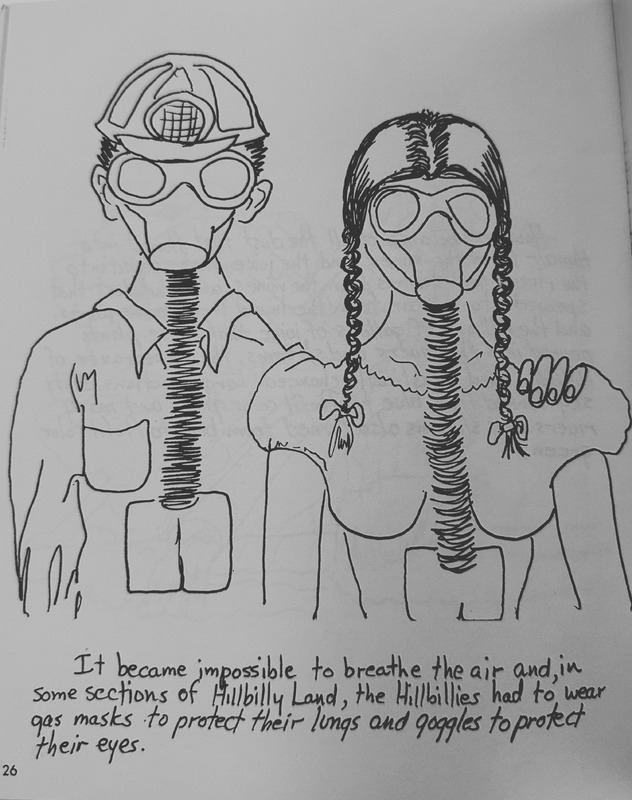
Marketed as a children's book about coal and Appalachia, warnings about the environmental costs rang through. This photo, taken from the children's book, highlights the deteriorating air quality in “Hillbilly Land,” which is said to be in West Virginia. Using the word "hillbilly" to describe the individuals in Appalachia, more specifically West Virginia, the author highlights how drastic the air quality is, noting how it is impossible to breathe, asserting the need for a gas mask to be able to breathe effectively. Here, we see two Appalachians wearing masks, seemingly as an everyday occurrence, with the casualness of their clothes and hair—this highlights how drastic the air quality difference is due to coal, and the measures needed for clean air.
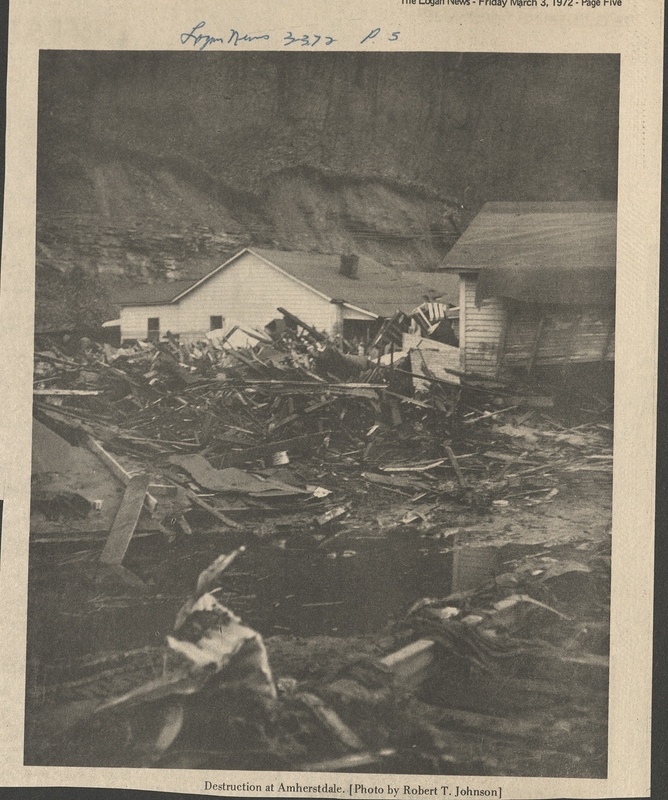
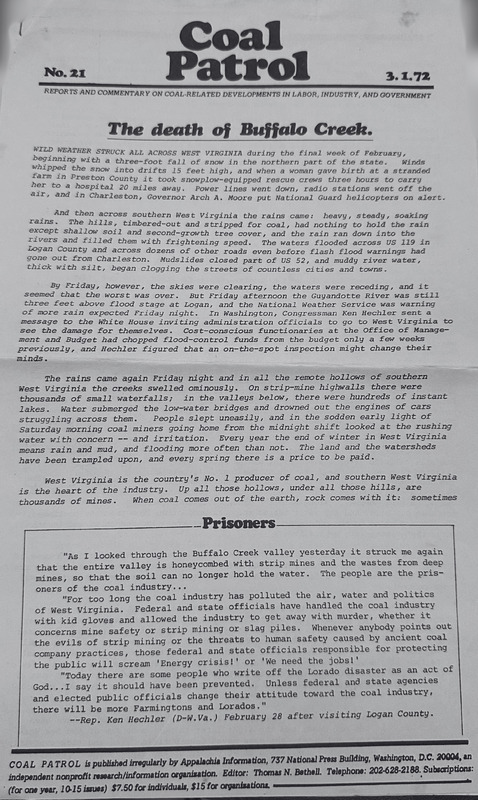
This article was released after the Buffalo Creek Mine Disaster. The work highlights the environmental conditions that led to the dam breaking. Due to heavy rain, rising creek beds, and waterfalls created at strip-mining sites, the precautions in place quickly gave out, leaving towns and people under water with nowhere to go. With it now being considered one of the most deadly mine-related disasters to occur within the United States, 125 individuals died, with over 1,000 injured. With dam no.3 failing and people losing their lives, this is a reminder of how coal mining can alter the environment, leading to harm or even death. This disaster led to the Dam Control Act of 1973, forcing stricter safety regulations. The Coal Patrol article gives an in-depth narrative of the tragedy caused by underground and surface mining.
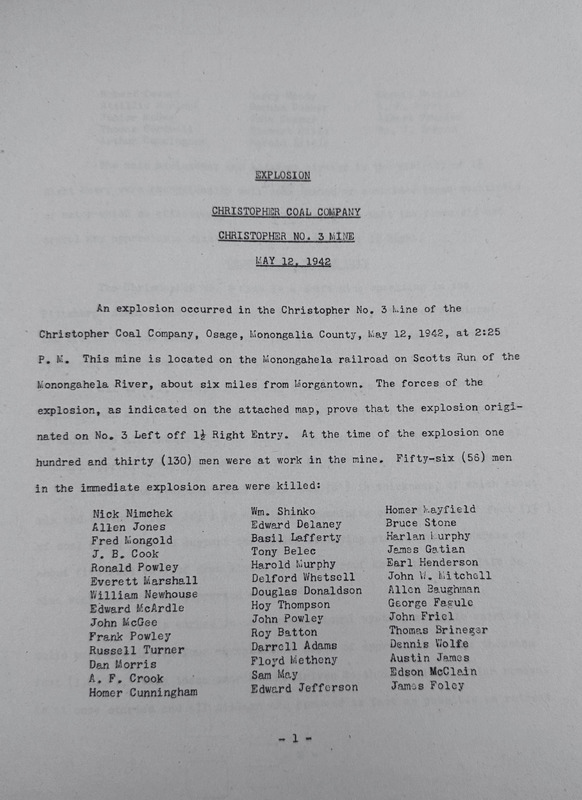
In the afternoon of May 12, 1942, an explosion occurred at the Christopher Coal Company Mine (mine number 3), located in Monongalia County. Located near the Monongahela River, just six miles from what is now known as Morgantown, West Virginia. When the explosion occurred, 130 men were inside the mine at work. In the split second of the explosion, 56 men were instantly killed on impact. When the explosion occurred, a fire occurred beyond the direct impact. The cause of the explosion is said to have been triggered when a worker accidentally left a ventilation door open, permitting methane to accumulate. When a spark from machinery occurred, the explosion ignited, instantly killing 56 men within the mine. This explosion is one of the first major mine explosions in the state, and with this coal company.
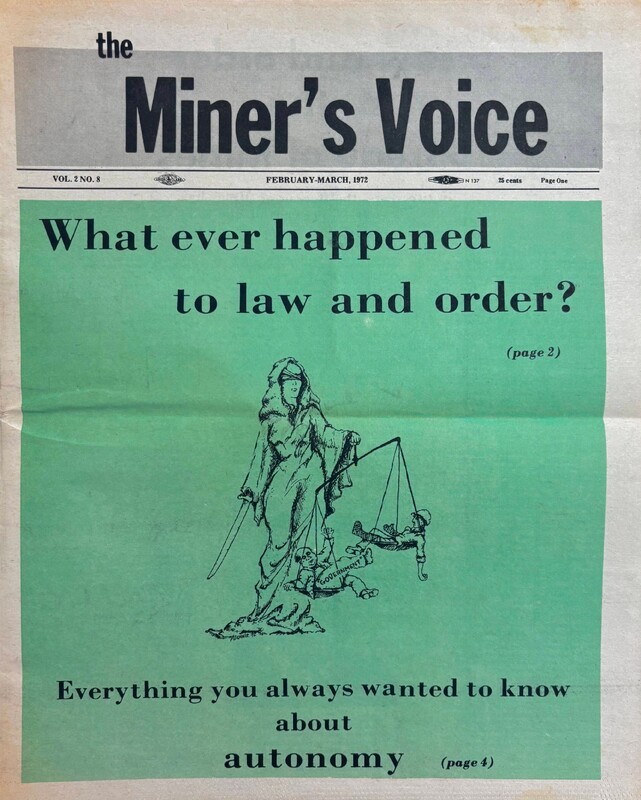
Selections from The Miners Voice, an independent newspaper published by rank-and-file miners in the 1970s. The Miners Voice was established as an alternative source of news to the union-controlled UMW Journal, bypassing the media promoted by then-UMW President Tony Boyce, who had become “a compliant tool of the coal industry” and was found to have ordered the murder of campaign opponent Joseph “Jock” Yablonski (Early, 2022). Because of this, they paid particular attention to promoting democratically minded candidates and fair union elections.
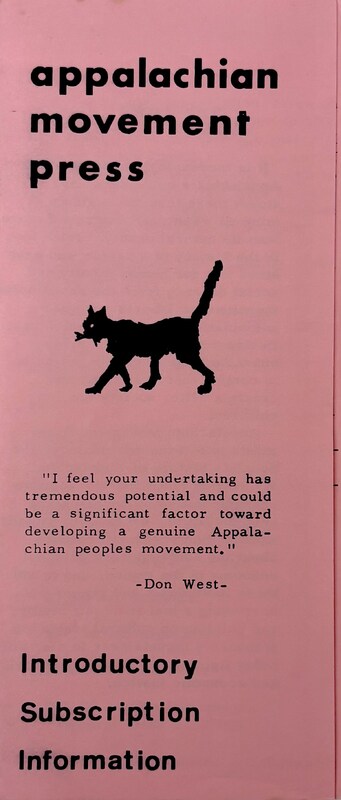
A pamphlet published by the Appalachian Movement Press (AMP) to introduce the press to new subscribers. The pamphlet includes a statement on the press’s mission to “tell the real history, the people’s history of Appalachia” and to aid those who “are today fighting for social, political, and economic justice”; a list of published pamphlets with corresponding prices; and subscription information. On the back, there are instructions to initiate a subscription by enclosing a check and returning it to AMP’s address, indicating the pamphlet was designed to double function as an envelope.
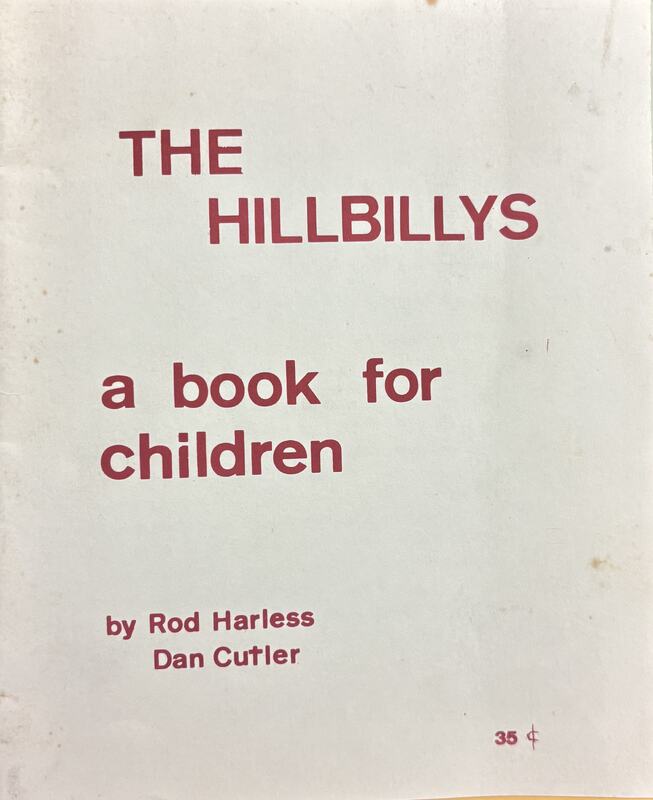
A historical fiction story written by Rod Harless, illustrated by Dan Cutler, and published by the Appalachian Movement Press (AMP). This 38-page story, unlikely to have actually been consumed by children, imagines “an ancient mountain kingdom called Hillbilly Land” in which the Hillbillies are forced to mine by “the Royal Profiteers” and consequently destroy the land, air, and water of their homeland. As a blatant allegory for extraction in West Virginia, the story took “a stark view of prior generations’ inability to counter the corporate takeover of the region’s mineral resources” and called the next generation to take action (Slifer, 2021).
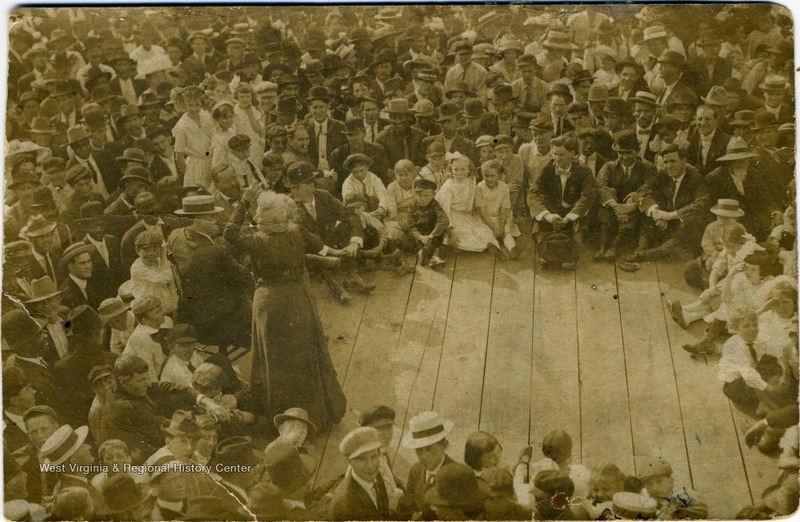
Photograph postcard of labor organizer Mother Jones speaking at a gathering in Montgomery, West Virginia (not far from Paint Creek) in 1912. Her audience included Black and white men, women, and children. Her speech that day stirred inspiration to keep up the rebellion: “I don’t care how much martial law the Governor of West Virginia proclaims. I have had martial law proclaimed where I was more than once, but I didn’t stop fighting… If they proclaim martial law, bury your guns. You can tell [the governor] that if you see him” (Ayers & Savage, 2018).
She traveled throughout the area making appearances and, in the following days, went on to give a similar speech to Cabin Creek miners, turning a strictly nonunion area into a pro-union district ready to follow Paint Creek’s lead by striking in demand of union recognition.
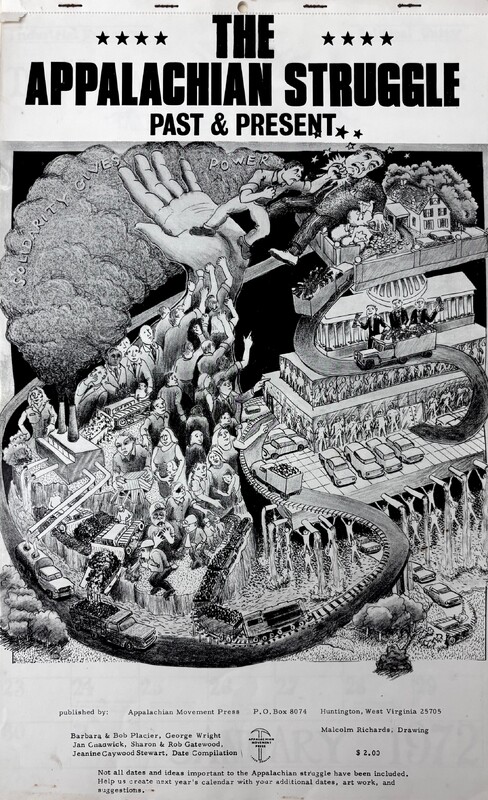
A 1972 calendar published by the Appalachian Movement Press (AMP). AMP was an independent activist press based in Huntington, West Virginia, that published works about Appalachian history and culture as well as activist literature related to regional labor, coal, and the rights of mountain residents. This calendar highlights historic dates important to Appalachian struggle and resistance. For example, see the month of January for “W. Va. Miners Strike Protesting Yablonski Slaying” (January 6, 1960), the month of May for “Matewan Massacre, Mingo County, W. Va.” (May 19, 1920), and the month of December for “Monongah #6 Mine Explosion, 361 Killed (December 6, 1907). The calendar’s cover and each month features detailed illustrations by artist Malcolm Richards to illustrate “the concerns of the Appalachian Left” (Slifer, 2021).
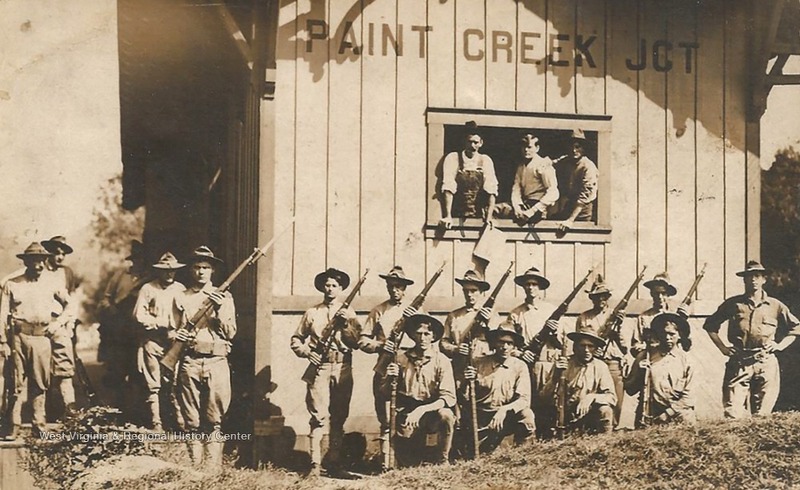
Armed coal miners on strike in Paint Creek, Kanawha County, West Virginia. Miners went on strike to demand that the coal operators raise their compensation rate to that of the surrounding area and recognize the union, and the strike quickly became armed hostility between miners and company men. “That spring of 1912, Winchester rifles and ammunition were being brought to and stored at the big house on the hill in Wacomah [...] Seventeen guns and ‘a washtub full of shells’ had to be delivered to the striking miners, all while the house was being closely watched by guards” (Ayers & Savage, 2018).