Data Centers
"We are extracting Earth's history to serve a split second of technological convenience," - Kate Crawford Anatomy of AI
This section focuses on the environmental impacts of data centers in West Virginia. We focus on the water, electrical, and land usage, as well as the human impact that data centers could have on the people of the state. This page is meant to bring up-to-date information about data centers within West Virginia as a growing development.
Background:
What is a Data Center?
A data center is a building that houses several computers. For companies to process and store data, data centers house the equipment necessary to do so (Elbeshbishi, 2025). There have been data centers placed in WV for storing software and data, but since generative AI has become more popular, there is potential for more data centers to come to the state. As of now, there are nine data centers in West Virginia. These centers are located in Charleston, Point Pleasant, Petersburg, Parsons, Bridgeport, Morgantown, and Berkley Springs (“West Virginia Data Centers”). These AI data centers will allow for people to use Large Language Models (LLMs) such as ChatGPT or OpenAI.
What is Artifical Intelligence?
Artificial intelligence is a difficult term to describe. There is no one definition to describe artificial intelligence, and there are different types of artificial intelligence as well (“What is Artificial Intelligence”, 2024). For this page, we want to focus on Generative AI, these large language models that require these data centers to generate ideas when given a specific prompt. The key difference between general AI and generative AI is that generative AI is used to create content. This includes texts, images, and even scientific research (Education of Illinois, 2023). Generative AI is more difficult to scale, which requires more power and use of resources; therefore, generative AI usage increases the need for data centers and power plants.
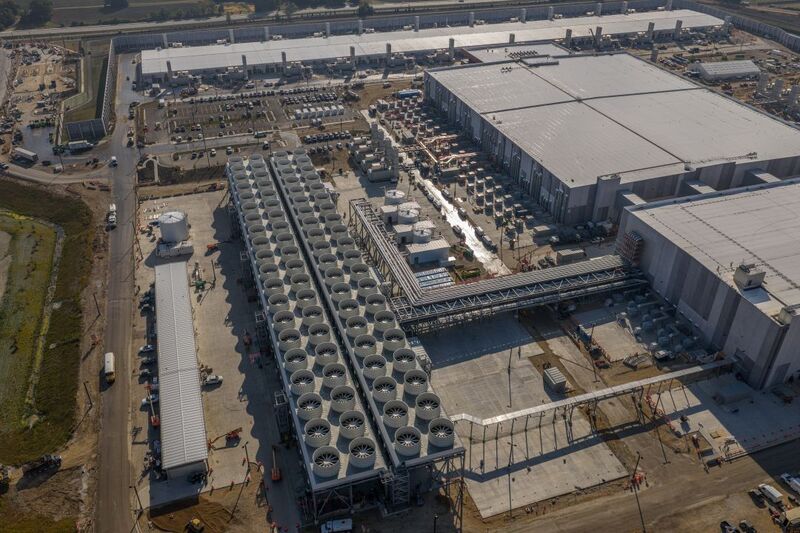
- Title
- Microsoft's new data center in Mt. Pleasant, Wisconsin
Environment:
Water
As the demand for more technology increases, so does the use of natural resources. The impacts data centers have on the environment overall are concerning, and it is important to bring awareness to these issues. One of the main concerns people have about data centers and the environment is the use of water. Within the last year, “[t]he environmental ministry revealed that Google data center plans to use 2,000,000 gallons of water a day directly from the drinking water supply, equivalent to the daily water consumption of 55,000 people” (Hao, 2025). Because of this massive usage of clean drinking water, those who could use it for cooking, drinking, and showering will be left with nothing to use. This means that water is scarce, which may lead to droughts and illnesses both within humans and animals. These concerns often go unnoticed due to the popularity of technological advancements, including artificial intelligence.
The increase in technology and artificial intelligence are some of the main reasons why data centers are coming to WV. Although it is argued that data centers may bring jobs to communities, there are environmental concerns that residents of the state are concerned about. According to Elbeshbishi, “Data centers can use several million gallons of water a day, which is as much as a town with 10,000 to 50,000 people. In many places where data centers already exist, local communities have had issues with them over their water consumption” (2025). The number of gallons of water used nationwide was released by a study done in March 2026. This study was done by the Food and Water Watch advocacy group, and it revealed that “water consumption by data centers nationwide tripled between 2014 and 2023”(Coyne, 2026 ). To cool down AI servers, data centers may use up to 720 billion gallons of drinking water a year. Even though people are concerned about the use of water for data centers, more data centers are coming to the state of West Virginia, in addition to the ones already in the state.
In March of 2026, Governor Patrick Morrisey announced that Google purchased land in Putnam County for a data center project. This data center is a “multimillion-dollar High Impact Center Project” that Morrisey claims is opening up West Virginia to more job opportunities. There is not much information yet about this data center, and it is still in development.
Electric
The amount of energy being used to power data centers continues to increase over time. Dustin Edwards, in Enduring Digital Damage, focuses on the digital world we live in and the extraction of resources to get there. According to Edwards, “[t]o cool the computers and servers in data centers, there needs to be a vast amount of energy”(2025). The data center coming to Putnam County will not only affect the drinking water, but energy of the county. To have the energy to use this data center, WV has decided to advance its energy to 50 gigawatts by 2050 (Governor Morrisey Announces Google Data Center Project in Putnam County, 2026). This is because if there are going to be more data centers coming to the state of WV, then the state needs to ensure that there is enough power for data centers to run and manufacture their computers and equipment.
Land Usage
Databases affect more than just water and power, it impacts the amount of land that is taken up to provide enough computers to allow for generated answers, AI art, and anything else someone puts into these Large Language Models. Much of the land that data companies buy in order to build these large data centers has to be big enough to house them. One proposed data center project called the Prince William Digital Gateway, “...would span more than 2,100 acres with 10 acres located within the congressionally authorized park boundary,” (New report sounds alarm). This land usage destroys habitats for animals as well as encroaches on federally protected land such as national parks meant for conservation, entertainment, and habitable land for native animals.
The data companies don’t stop at national parks when it comes to data center development. Residential land is also up for grabs by the data companies to construct their data centers, “Uttech later learned that the transmission line would be used to help power a massive $15 billion data center campus that's set to be built on over 500 football fields' worth of farmland in nearby in Port Washington -- a signature part of the Trump administration's $500 billion Stargate partnership with OpenAI and Oracle, which President Donald Trump hopes will help supercharge the artificial intelligence revolution,” (Schulze, et al). This will push residents out of their homes that they may have lived in for decades and raise the cost of living.
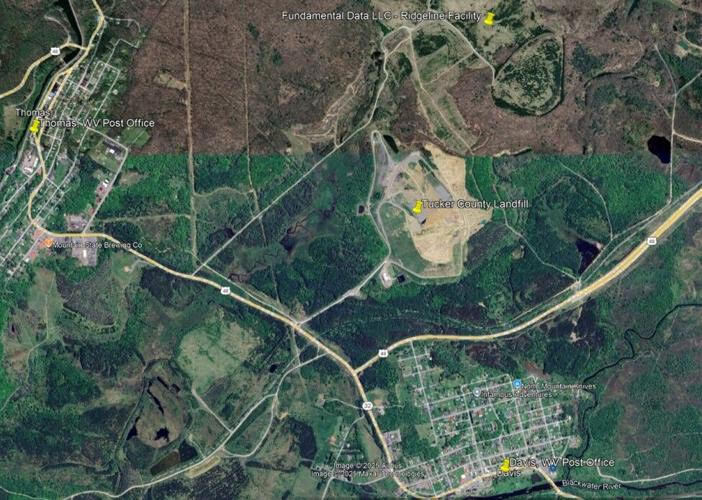
- Title
- Tucker county power facility for planned data center
- Description
- A google map view of the proposed gas-fueled turbine power facility that will power the data center planned to be constructed within Tucker county, West Virginia. Shown is the distanced between it and the Tucker County Landfill and the Thomas and Davis post office.
Human Impact:
Data centers impact more than just the environment. When data centers are in their development phase, many of the developers will choose to place them within populated areas to possibly encourage workers to come to the area. However, these developers and big tech companies don’t think about the people who are already living in the area. They propose new jobs and a better economy for the town, especially here in West Virginia where the economy is lackluster compared to other states in the country, “...Governor Morrisey announced a historic private-sector investment in West Virginia by Penzance Management that will result in a total capital investment of $4 billion at full build out, a project that will create jobs, strengthen local infrastructure, and fund community programs in the Eastern Panhandle,” (Governor Morrisey announces $4 billion 2026). The promise of jobs is a way to convince those who are in the area where the data center is being built to feel better about the decision—that they did not make—and a way to defend against the decision However, there is no guarantee that anyone within the towns that the data centers are being built will receive the jobs or the “benefits” that come from data centers, “Most of the taxes earned on data centers and microgrids will go to state level funds. The counties in which they are located will only get 30% of the revenue,” (Elbeshbishi 2025). This clearly shows that there is no good reason to have a data center built in West Virginia, especially because West Virginian citizens reaping no benefits but instead are punished from the consequences from these supposed life changing data centers.
Air Pollution
Air pollution often intersects both the environmental impact and the human impact when it comes to industrial buildings. Often large buildings that are used for industrial reasons produce a lot of pollution, and data centers are no different. Due to their large size and the amount of energy that is needed to power them, there is often more pollution seeping from than other buildings, “And because companies are looking to power their data centers themselves — in some cases through natural gas powered plants — air pollution is emerging as another risk associated with data centers. Such power plants typically emit a combination of air pollutants that can have serious environmental and health impacts;” much of what is polluting the air from data centers is nitrogen oxide, carbon dioxide, and sulfur dioxide, which can cause a lot of health issues for those who live and breathe everyday (Electric Power Sector Basics 2026). This would mean that not only would the ozone layer be affected, the people who are unfortunately stuck near a data center might develop chronic or life threatening issues.
Noise Pollution
Another human impact that is often overlooked is noise pollution, especially in tandem with environmental impacts. Noise levels can affect the daily lives of people within their communities making it harder for them to function within society. Data centers, “...are a source of noise pollution and can reach concerning decibel levels. Data centers are typically associated with a constant low humming sound, which comes from their cooling systems that run around the clock to keep the temperature down. The noise can also come from the facilities’ backup generators, which are usually diesel,” (Elbeshbishi 2025). This could make it harder for residents to get proper sleep, go about their day without any disruptions, and disturb wildlife within the area. Constant noise can cause health issues such as anxiety, migraines, or even heart disease (Llorico & Robinson 2023). Since data centers have so much noise, this means that residents are at higher risk for health issues which will eventually drive people away from towns or counties that now house these large AI data centers.
Conclusion
Due to the amount of land and natural resources the state of West Virginia has, companies are looking to create their data centers in the state of WV with little to no care of the environmental impacts it will have on the state. Recent events and concerns regarding data centers have caused community resistance and hope for others to speak out. If you are interested in learning more about the data centers and their impacts on the environment, you may be interested in reading more articles or novels on the subject. Some recommended novels are Empire of AI by Karen Hao, Enduring Digital Damage by Dustin Edwards, and Atlas of AI by Kate Crawford.
Bibliography
Coyne, C. (2026, March 11). WV Senate passes data center rules with new language urging developers to study potential water use • West Virginia Watch. West Virginia Watch. https://westvirginiawatch.com/2026/03/11/wv-senate-passes-data-center-rules-with-new-language-urging-developers-to-study-potential-water-use/.
Education at Illinois. (2023). College of Education; College of Education at Illinois. https://education.illinois.edu/about/news-events/news/article/2024/11/11/what-is-generative-ai-vs-ai.
Edwards, D. (2025). Enduring Digital Damage. University Alabama Press.
Elbeshbishi, S. (2025, July 17). What’s the big deal about data centers? Here’s what West Virginians need to know. Mountain State Spotlight. https://mountainstatespotlight.org/2025/07/17/west-virginia-data-centers-explained/
Environmental Protection Agency. (2026, February 26). Electric Power Sector Basics. EPA. https://www.epa.gov/power-sector/electric-power-sector-basics#publichealthenvironmentalimpacts
Governor Morrisey Announces Google Data Center Project in Putnam County. (2026, March 27). Wv.gov. https://governor.wv.gov/article/governor-morrisey-announces-google-data-center-project-putnam-county
Hao, K. (2025). Empire of AI. Penguin.
Llorico, A., & Robinson, B. (2023, April 7). What’s all the data center noise about? WUSA9. https://www.wusa9.com/article/news/verify/verify-whats-all-the-data-center-noise-about/65-0a695ecf-9eac-44bc-93f8-9fd7f4bbfd88
West Virginia Data Centers - 9 Facilities from 9 Operators. (2026). Datacentermap.com. https://www.datacentermap.com/usa/west-virginia/
“New Report Sounds Alarm on Data Center Impacts to National Parks across Mid-Atlantic, Calls for Common Sense Reforms .” National Parks Conservation Association, National Parks Conservation Association, 19 Mar. 2026, www.npca.org/articles/11365-new-report-sounds-alarm-on-data-center-impacts-to-national-parks-across-mid.
Schulze, Elizabeth, et al. “A 600-Acre AI Data Center Could Cost Some Wisconsin Residents Their Land.” ABC30 Fresno, 18 Feb. 2026, abc30.com/post/600-acre-ai-data-center-could-cost-wisconsin-residents-land/18616706/.